
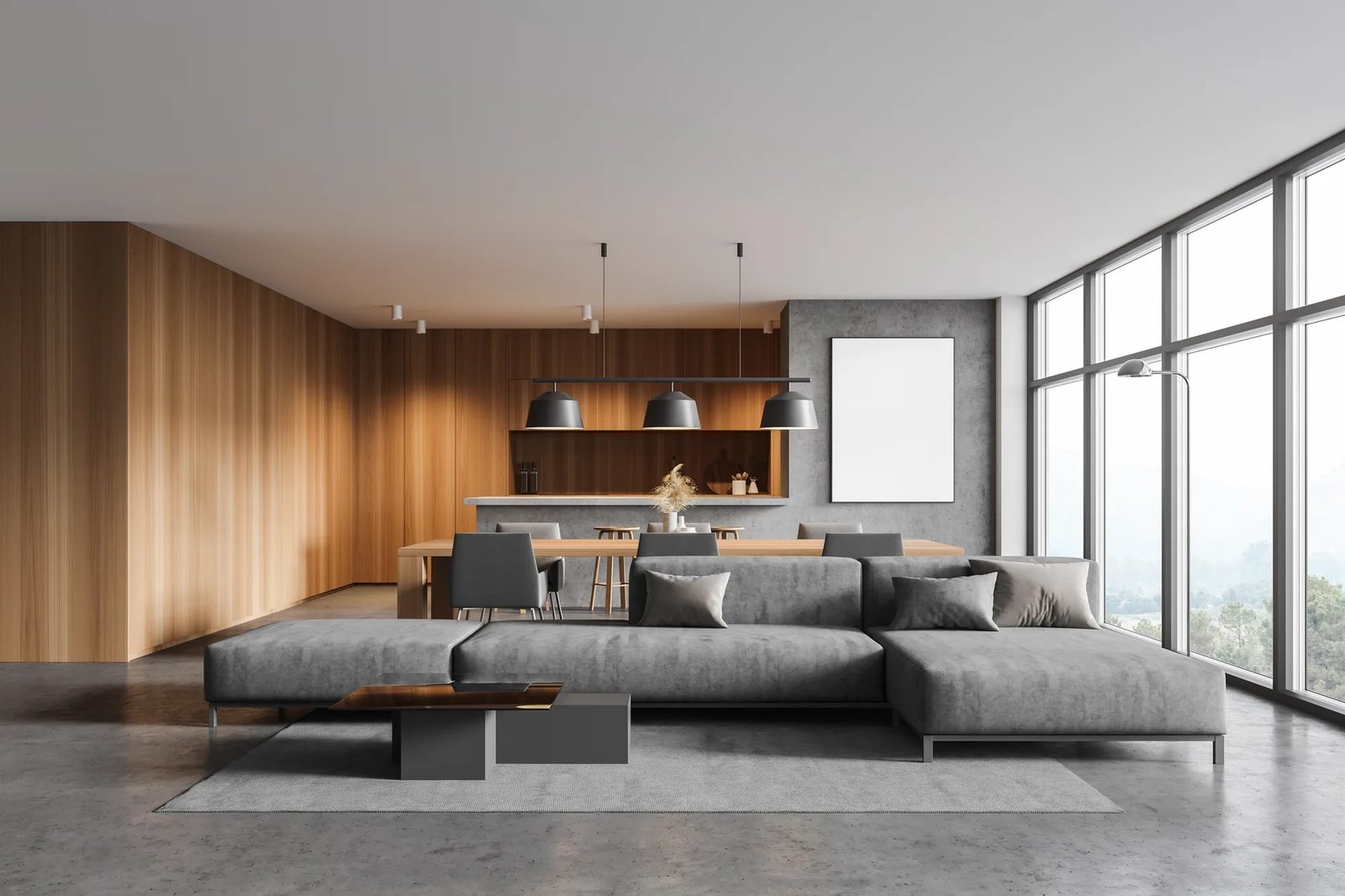

A good interior render can make choosing a sofa, a floor tile or a kitchen benchtop much easier. You can see the whole room come together before you spend a cent. But a render is a picture of an idea, not a photo of a finished room, and it is easy to read too much into it. Here is how to look at one with a buyer’s eye, so it helps your decisions instead of steering them the wrong way.
1. Check the scale first
Scale is where most surprises come from. A sofa that looks generous in a render can turn out to block a walkway once it arrives. Before you fall in love with a layout, ask for the key dimensions: room width, ceiling height, and the size of the main pieces of furniture. Look for something of known size in the image, such as a standard door, a dining chair or a kitchen bench, and use it as a ruler for everything else.
Also check the camera angle. Renders are often shot with a wide lens from a corner of the room, which makes a space feel bigger than it will feel when you stand in it. If you can, ask for one view taken from normal eye height, around 1.6 metres, looking across the room the way you will actually use it.
2. Treat colours as a guide, not a match
Screens vary a lot. The same render can look warm on a phone and cool on a laptop, and neither will match the paint chip or timber sample exactly. Use the render to judge how colours work together, such as whether the floor and joinery feel balanced, and then make the final call with physical samples in the real room.
When you look at samples, view them in daylight and at night under the lights you plan to install. Timber, stone and fabric can shift noticeably between morning sun and warm evening downlights.
3. Look closely at the lighting
Lighting does a lot of the work in a render. Soft, even daylight pouring through big windows flatters every surface. Ask yourself whether the light in the image is realistic for your home. Which way do the windows face? Is there a verandah or a neighbouring building that will cut the light? Will the room mostly be used at night?
A useful request is to see the same view in two lighting conditions, for example a bright midday view and an evening view with only the artificial lights on. If a finish only looks good in one of them, that is worth knowing before you order it.
4. Separate the styling from the finishes
Renders are usually styled like a magazine shoot, with fresh flowers, art, cushions, throws and a perfectly clear benchtop. Styling is part of what makes an image appealing, but it can hide how the base finishes really look. Try to picture the room with the props taken away. Do you still like the floor, the walls and the joinery on their own?
If the render was produced for a builder or developer, check which items are included in the price and which are styling only. Pendant lights, rugs and loose furniture are often added to the image but are not part of the package.
5. Check the materials that matter most
Zoom in on the finishes you are about to commit to. Look at the scale of the tile pattern, the direction of the floorboards, the grout colour, and the way the benchtop edge is detailed. These are small things in a picture but big things in a finished room. A large-format tile and a small mosaic can read very differently once they cover a whole wall.
It also helps to ask what the materials in the render are based on. If they are modelled from the actual product you will buy, the render is a strong guide. If they are a generic stand-in, treat the image as a rough mood only.
6. Use the render to ask better questions
The best use of a render is as a conversation tool. Share it with your builder, designer or kitchen supplier and ask them to point out anything that will look different in real life. Ask about clearances around the dining table, the height of the island bench, and where the power points and switches will sit. These details rarely show up in a render, but they shape how the room feels every day.
If you are working with a studio that offers 3D interior rendering, it is usually quick to try alternatives, such as a different floor colour or a smaller sofa, before anything is ordered. Changing a render costs far less than changing a kitchen.
The bottom line
An interior render is one of the best tools you have for planning furniture and finishes, as long as you read it carefully. Check the scale, treat colours as a guide, question the lighting, look past the styling, and zoom in on the materials you are actually buying. Then confirm the important choices with real samples in the real room.
About the author: Shrey Agarwal is the founder of [Build3DRender](https://build3drender.com.au), a 3D architectural rendering studio in Ultimo, Sydney, that creates photoreal interior and exterior renders for builders, designers and homeowners.