
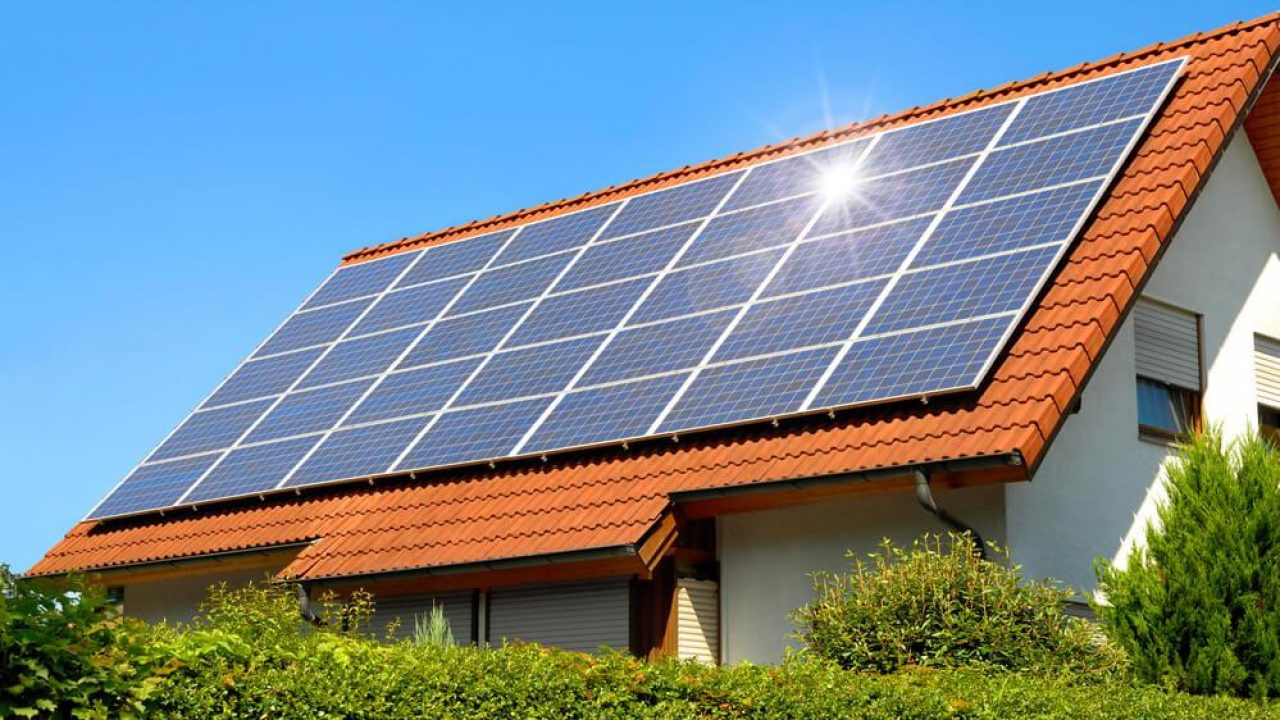

Most Hornsby homeowners with solar panels check their inverter app occasionally, notice the system is producing something and assume everything is fine. What that app does not tell you is how much power your system should be producing compared to what it actually is.
Dirty panels are one of the most common and most underestimated reasons for below-par solar performance in Hornsby. The loss is gradual, invisible from the ground and easy to overlook until you sit down and do the numbers. When you do, the figures are often surprising.
Solar Panel Cleaning Hornsby Power Loss 2026
Hornsby sits in one of the more heavily vegetated parts of Sydney’s north. The suburb is bordered by Hornsby Heights, Waitara and Asquith, and the broader area is characterised by significant native bush, mature street trees and residential gardens with established canopy coverage.
That environment is part of what makes Hornsby a desirable place to live. It is also the reason why solar panels in the area face a particularly demanding contamination environment compared to less vegetated Sydney suburbs.
What Is Landing on Your Panels
The contamination profile on a Hornsby solar panel is a combination of several different sources, each contributing to the overall layer of grime that reduces light transmission.
Native tree debris and pollen. Hornsby and its surrounding suburbs sit adjacent to areas of Sydney sandstone bushland. Eucalypts, banksias, angophoras and wattles all produce significant quantities of pollen and fine organic dust throughout the year, with particularly heavy output during spring. This material settles on panel surfaces and, when mixed with morning dew or light rain, forms a sticky film that does not simply rinse away.
Bird droppings. Hornsby’s tree coverage supports a large and diverse bird population. Bird droppings are among the most damaging contaminants for solar panels because they are acidic, opaque and concentrated. A single dropping sitting over a solar cell can cause a disproportionate output loss due to the way panel strings handle shading, even when the rest of the panel surface is relatively clean.
Urban dust and particulate matter. Pacific Highway and the surrounding arterial road network through Hornsby contribute fine particulate pollution that settles across the suburb. This combines with moisture on panel surfaces to form an adhesive dust layer.
Leaf residue and organic decomposition. Leaves that land on panels and are then rained on leave behind dissolved organic residue as they wash away. Over multiple seasons this accumulates as a brownish film that significantly reduces panel transparency.
Why Hornsby’s Rainfall Does Not Solve the Problem
A common assumption among solar panel owners is that Sydney’s rainfall keeps panels reasonably clean without any intervention. In Hornsby, this assumption is particularly unreliable.
Hornsby receives good annual rainfall, but rain events in urban environments do not deliver clean water. Rainwater picks up pollutants as it falls through the atmosphere and across rooftop surfaces, meaning it carries as much contamination as it removes in many cases. Light rain followed by rapid drying is often worse than no rain at all because it concentrates dissolved residue as the water evaporates, leaving behind a thin mineral and organic deposit with each cycle.
Panels cleaned exclusively by rainfall in Hornsby’s environment develop a progressively worse surface condition over time. Each season adds another layer to what is already there rather than resetting the surface to clean.
How Much Solar Power Lost Dirty Panels Hornsby
The question most Hornsby homeowners want answered is not whether dirty panels cost them power. It is how much power, and what that means in practical financial terms.
The Research Behind Soiling Loss Figures
Research into solar panel soiling losses in Australian urban and suburban environments consistently shows output reductions in the range of 5 to 25 percent for panels that go without professional cleaning for extended periods.
The exact figure for any individual property depends on several factors including panel angle, surrounding vegetation, proximity to pollution sources, time since last clean and local weather patterns. According to GutterGorilla, a rooftop maintenance provider operating across Sydney’s northern suburbs, panels in vegetation-heavy areas like Hornsby that go twelve months or more without cleaning commonly experience losses toward the middle and upper end of that range.
Putting the Numbers in Context for a Typical Hornsby Home
To make these figures meaningful, it helps to look at them in terms of a real system.
A 6.6kW solar system in Hornsby under good conditions might produce an average of around 24 to 27 kilowatt-hours per day across the year. This accounts for seasonal variation in sunlight hours between summer and winter.
At a conservative 10 percent soiling loss, that system is losing roughly 2.4 to 2.7 kilowatt-hours every single day. At current NSW electricity rates and typical feed-in tariff levels, that daily loss translates to somewhere between $0.80 and $1.50 per day depending on how that generation is used, whether it is exported or self-consumed.
Over a full year, a 10 percent soiling loss on a 6.6kW system in Hornsby represents a financial loss in the range of $300 to $550 in reduced savings or feed-in revenue. For larger systems in the 10kW range, that figure scales accordingly.
At 15 to 20 percent soiling loss, which industry sources note is not unusual for panels in vegetation-rich suburbs that have gone two or more years without cleaning, the annual financial impact moves well above $500 and can approach $1,000 or more on a larger system.
The Bird Dropping Problem Is Worse Than You Think
For Hornsby homeowners, bird droppings deserve specific attention because they cause a type of power loss that is disproportionate to their physical size.
Modern solar panels are made up of cells wired together in strings. When one cell in a string is shaded or blocked, the output of the entire string is reduced to match the weakest cell. This is how a concentrated deposit covering a small area of one panel can drag down the output of a much larger section of the array.
In a bird-active suburb like Hornsby, it is not uncommon for multiple concentrated deposits to be sitting on a panel array at any given time. GutterGorilla notes that on properties with significant bird activity, measured output losses often exceed what general soiling percentage estimates would predict, precisely because of this string-level shading effect.
How to Tell If Your System Is Underperforming
These are the signs worth checking on any Hornsby solar system.
- Your inverter monitoring shows daily output figures that are lower than expected for the current season and recent weather conditions
- Output has been gradually declining over the past six to twelve months in a pattern that does not match seasonal variation
- You can see visible staining, discolouration or deposits on panels from the ground or from a window with a view of the roof
- Your electricity bills have been higher than expected despite no significant change in household usage
- It has been more than six to eight months since the panels were last professionally cleaned
Any of these indicators is sufficient reason to book a professional inspection and clean.
Solar Panel Cleaning Cost Hornsby Efficiency Impact
Understanding what professional solar panel cleaning costs in Hornsby, and how that cost compares to the power and money being recovered, makes the financial case straightforward for most homeowners.
What Does Solar Panel Cleaning Cost in Hornsby?
Professional solar panel cleaning costs in Hornsby vary depending on the size of the system, the roof pitch and access difficulty, and what is included in the service.
As a general guide for Hornsby residential properties in 2026:
- A standard single-storey home with a system up to 6.6kW: approximately $180 to $280
- A two-storey home or larger system up to 10kW: approximately $250 to $380
- Larger systems or properties with complex roof access: costs reflect the additional time and equipment required
Pricing varies across providers. Services at the lower end of the market tend to involve a basic rinse rather than a thorough clean, which affects how much output is actually recovered. More comprehensive services, which include appropriate water treatment, close inspection and documentation, generally sit above the basic market average in price.
What a Quality Service Should Include
A professional solar panel clean that delivers genuine output recovery should cover the following.
- Safe roof access using appropriate equipment and safety procedures for the specific property
- Pre-clean inspection of panel surfaces, frames and visible mounting hardware to note any existing damage or concerns
- Cleaning with appropriate water such as deionised or reverse osmosis water, which leaves no mineral residue on panel surfaces
- Soft brush technique that removes contamination without scratching or damaging anti-reflective coatings
- Post-clean inspection and documentation including before and after photos so the homeowner has a clear record of the work done
- Basic system observation noting any visible issues with mounting hardware, wiring conduits or roof surfaces around the array
Providers who rinse panels with tap water and leave are not delivering a service that fully restores performance. Tap water contains dissolved minerals that deposit on panel surfaces as the water evaporates, potentially leaving a residue layer that continues to affect output.
The Return on Investment Calculation
For most Hornsby homeowners, the maths on professional solar panel cleaning is not complicated.
A clean costing $220 to $280 that recovers 10 to 15 percent of system output on a 6.6kW system delivers an annual financial benefit in the range of $300 to $500 at current rates. The clean pays for itself within weeks of the service and continues delivering the benefit until contamination rebuilds to a level that begins affecting output again.
For larger systems or those that have gone longer without cleaning and are experiencing higher soiling losses, the return on a professional clean is even faster.
How Often Should Hornsby Panels Be Cleaned?
For most Hornsby properties, a professional clean once to twice per year is the appropriate frequency.
- Properties with significant bird activity or large native trees directly above or adjacent to the array benefit from two cleans per year
- A spring clean before the high-sunlight summer months is the single highest-value timing for output recovery
- Properties in more open positions with less surrounding vegetation and moderate bird activity may manage well with an annual clean
- Any property where monitoring data shows a consistent downward trend in output should consider moving to more frequent cleaning regardless of the standard recommendation
Hornsby Solar Panel Cleaning Services Power Generation Decrease
For Hornsby homeowners ready to act on their solar panel maintenance, understanding what to look for in a provider and why service quality matters to actual output recovery is the final piece of the picture.
Why Provider Choice Affects Output Recovery
Not all solar panel cleaning services deliver the same result. The difference between a thorough professional clean and a rushed surface rinse is measurable in the output figures your inverter reports in the days following the service.
A proper clean using deionised water and correct technique removes the full contamination layer from the panel surface, restoring light transmission to close to the original specification. A rinse with mains water and a soft cloth removes loose debris but leaves behind mineral deposits and embedded organic residue that continues to reduce output.
The quality of the clean determines how much of your lost output you actually recover, and how long it takes before contamination rebuilds to a level that starts affecting performance again.
Quick Tips for Protecting Your Solar Investment Between Cleans
- Check your inverter monitoring app monthly and record daily output figures so you have a baseline to compare against
- After any significant storm or wind event, do a visual check from the ground for visible debris accumulation on panel surfaces
- Note the date of each professional clean so you can track the relationship between cleaning and output performance over time
- Do not attempt to clean panels yourself with tap water or abrasive materials as these can leave residue or cause surface damage that affects long-term performance
- If your system has monitoring that shows individual panel or string output, pay attention to any strings that are consistently underperforming relative to others as this often indicates a concentrated soiling deposit
The Broader Rooftop Picture
Solar panels do not sit in isolation on a roof. They share the rooftop environment with gutters, fascia boards, roof sheeting and mounting hardware, all of which are affected by the same Hornsby environment that contaminates the panels.
Blocked or overflowing gutters near a solar array create moisture problems that can affect mounting hardware and the roof surface beneath panel frames. GutterGorilla points out that leaf and debris accumulation in gutters also contributes to the organic dust and debris load that settles on panel surfaces, meaning gutter maintenance and panel cleanliness are more closely connected than most homeowners realise.
Addressing solar panel cleaning and gutter maintenance together as part of a coordinated rooftop maintenance approach makes practical sense for Hornsby properties. A rooftop that is well maintained across all its systems tends to perform better and develop fewer unexpected issues over time.
Finding the Right Provider in Hornsby
When comparing solar panel cleaning providers in Hornsby, the key questions to ask any service are whether they use deionised or purified water, whether the job includes a pre and post inspection with documentation, and whether the technician will flag any panel or mounting issues observed during the clean.
Homeowners researching their options can find detailed information about what a professional solar panel cleaning service should cover, including the equipment and techniques involved, on GutterGorilla’s solar panel cleaning page.
Final Thoughts
Dirty solar panels in Hornsby are costing homeowners real money every day they go without cleaning. The losses are quiet, gradual and easy to ignore until you look at the numbers properly. When you do, the case for regular professional cleaning becomes one of the clearest financial decisions a solar panel owner can make.
Hornsby’s environment, with its native vegetation, bird activity and urban particulate load, means panels here need more attention than the set-and-forget assumption most homeowners start with. A clean once or twice a year, timed well and done properly by a qualified provider, keeps your system performing at or close to its rated capacity.
The power you are losing to dirty panels is recoverable. The only question is how long you leave it before you act.