
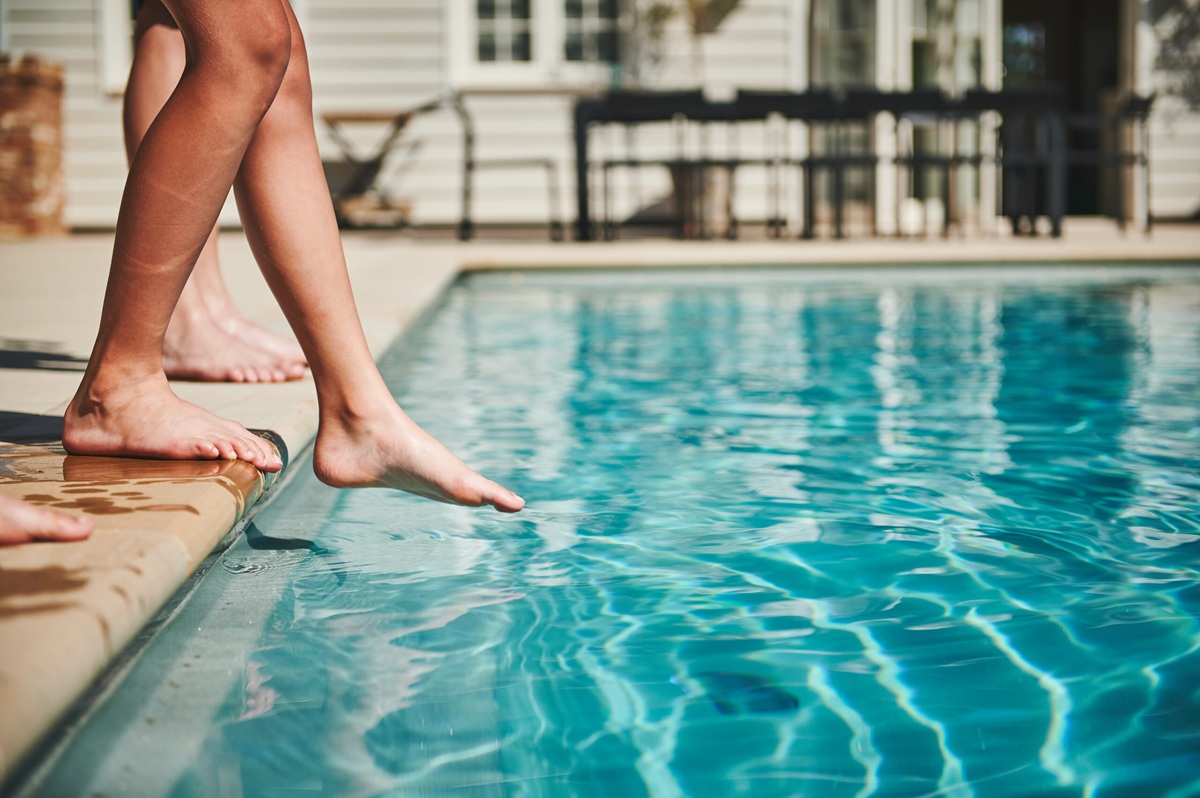

Nothing defines the Australian summer like the backyard pool. From Christmas Day barbeques to cooling off after a long day in the January heat, the pool is the heart of the home.
The most critical factor in your water chemistry is pH. Maintaining the correct balance ensures your chlorine works effectively, your equipment lasts longer, and—most importantly—your family can swim without stinging eyes or itchy skin.
The ideal pH range for an Australian swimming pool is 7.2 to 7.6. In this guide, we’ll break down exactly how to hit that “sweet spot” and keep your pool sparkling all summer long.
Also Read: Outdoor Dining Area Ideas: Design a Perfect Spot for Family
What Is Pool pH? (The Simple Science)
In simple words, pH is a measure of how acidic or alkaline (basic) your pool water is. The scale runs from 0 to 14, with 7 being neutral.
Low pH (< 7.0): The water is too acidic.
High pH (> 7.8): The water is too alkaline.
Why does it matter?
If your pH is out of whack, your chlorine becomes “lazy.” Even if you have plenty of chlorine in the water, it won’t kill bacteria effectively if the pH is too high. Conversely, if it’s too low, the water becomes “hungry,” eating away at your pool’s internal surfaces and metal hardware.
The Ideal Level for Australian Pools
In Australia, we aim for a range of 7.2 to 7.6. While 7.0 is technically neutral, the pH of a human eye is approximately 7.4. By keeping your pool at 7.4, the water is as comfortable as possible for swimmers.
In hot climates like Queensland or Western Australia, maintaining this range is vital. High UV exposure doesn’t just evaporate water; it can cause chemical reactions that shift your balance rapidly. A stable pH means your sanitiser is at peak performance, keeping the water safe despite the heat.
Why Pool pH Fluctuates in the Aussie Climate?
Our environment is beautiful but tough on pool water. Several local factors cause your pH to shift:
- Strong Sunlight & Evaporation: As water evaporates, minerals stay behind, often causing pH to rise.
- Heavy Rain & Summer Storms: Rain is often slightly acidic. A massive tropical downpour can dump “fresh” water into your pool, crashing your pH and alkalinity levels overnight.
- The “Swimmer Load”: More people means more sunscreen, sweat, and oils entering the water, all of which disrupt the chemical balance.
- Dust and Debris: Wind-blown dust and organic matter (like eucalyptus leaves) can alter the water’s chemistry as they break down.
- Saltwater Cells: Most Australian pools are saltwater. The process of electrolysis used to create chlorine naturally produces a byproduct that raises the pH over time.
Also Read: How to Lay an Artificial Lawn? Your Step-by-Step Guide
How to Test Your Pool pH?
You can’t manage what you don’t measure. During the height of summer, you should test your water 2 to 3 times a week.
- Test Strips: The quickest and easiest method. Simply dip and compare colours. Good for a “quick check.”
- Liquid Test Kits (DPD): More accurate than strips. You add drops to a water sample and check the colour change. This is the preferred method for most Aussie DIYers.
- Digital Testers: Highly accurate and easy to read, though they require occasional calibration to stay precise.
Pro Tip: Always take your water sample from about elbow-deep, away from the return jets, to get the most accurate reading of the bulk water.
How to Lower High Pool pH?
If your test comes back above 7.6, you need to bring it down. High pH causes “scale” (white crusty buildup) and cloudy water.
The Solution: Use Hydrochloric Acid (Muriatic Acid) or Dry Acid (Sodium Bisulphate).
How to add it:
- Calculate the dose based on your pool volume (check the label on the bottle).
- Always pour the acid into a bucket of pool water first to dilute it (Acid to Water, never the other way around!).
- Walk around the perimeter of the pool, pouring the mixture into the deep end while the pump is running.
- Wait at least 4 hours before retesting.
Also Read: 10 Patio Furniture Design Ideas for the Australian Lifestyle
How to Raise Low Pool pH?
If your pH is below 7.2, your water is acidic. This can etch your pool’s surface and cause metal ladders or heaters to rust.
The Solution: Sodium Carbonate, commonly known as Soda Ash. How to add it:
- Dissolve the required amount of Soda Ash in a bucket of water.
- Distribute the mixture evenly around the pool.
- Retest after 12–24 hours to ensure the levels have stabilised.
Note: Do not confuse Soda Ash with Sodium Bicarbonate (Pool Buffer). Bicarb is used primarily to raise Total Alkalinity.
How much it costs to maintain pool pH in Australia?
Maintaining the pH level of a swimming pool is one of the most frequent (and relatively affordable) parts of pool ownership in Australia. However, because our climate is so variable, the costs can fluctuate depending on whether you are battling a heatwave in Perth or a rainy season in Queensland.
On average, an Australian homeowner will spend between $100 and $250 per year specifically on pH-related testing and chemicals.
Saltwater vs. Chlorine Pools: What’s the Difference?
While both pools use chlorine to sanitise, the way they affect pH differs:
Saltwater Pools: These are the most common in Australia. The chlorinator cell creates a byproduct called sodium hydroxide, which has a very high pH. Consequently, saltwater pool owners almost always struggle with pH rising. You will likely need to add small amounts of acid regularly.
Liquid Chlorine Pools: pH tends to fluctuate more sporadically based on weather and usage rather than a constant upward climb.
Also Read: Guide to Crazy Paving for Australian Homes
pH Maintenance Tips for Aussie Pool Owners
Balance Alkalinity First: Total Alkalinity (TA) is the “anchor” for your pH. If your TA is low, your pH will bounce around wildly. Keep TA between 80–120 ppm.
Run the Pump Longer: In a heatwave, run your pump for at least 8–10 hours a day to ensure chemicals are properly mixed.
Use a Pool Cover: This reduces evaporation by up to 97%, keeping your chemicals (and water) where they belong.
Clean the Filter: A dirty filter can harbour organic matter that messes with your chemical readings.