
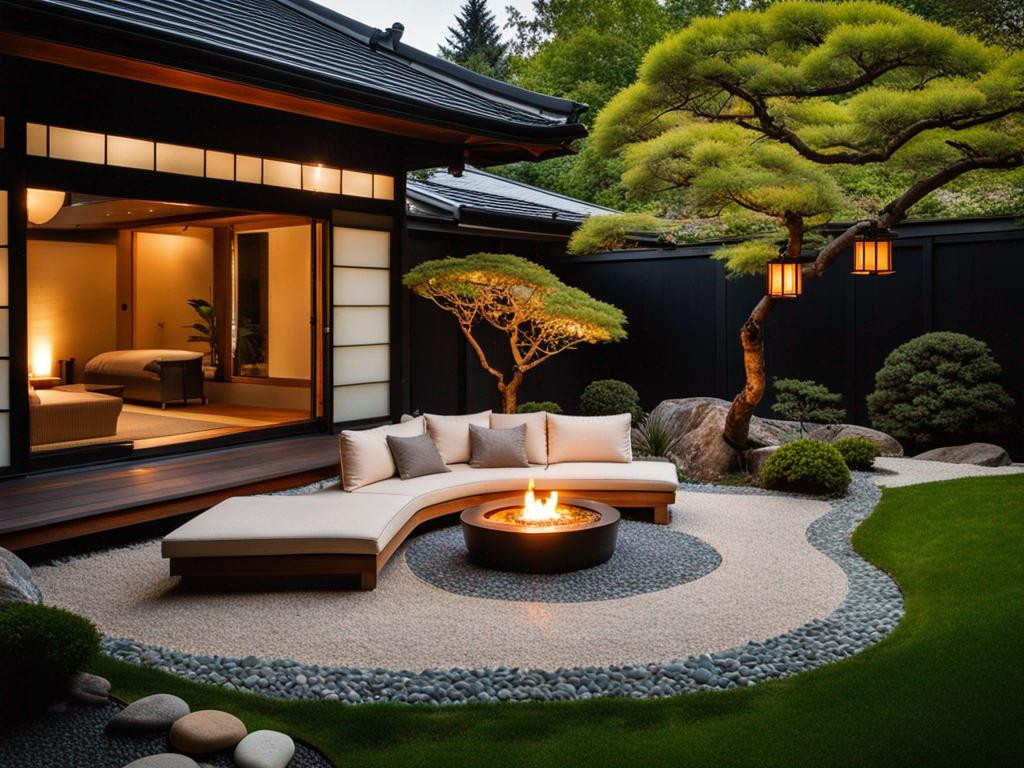

In the fast-paced world of modern Australia, our backyards have become more than just a patch of grass—they are our sanctuaries. Few landscaping styles offer as much tranquility and timeless beauty as the Japanese garden. Known for its focus on minimalism, natural materials, and the balance of elements, a Japanese-inspired space provides a quiet retreat from the noise of daily life.
You don’t need a massive estate to channel the “Zen” aesthetic. By incorporating a few key decorative elements, you can transform a standard Aussie courtyard or suburban block into a meditative haven.
Here are 8 Japanese garden decor ideas to help you find your inner peace.
Also Read: Brilliant Small Backyard Landscaping Ideas for Aussie Homes
1. The Shishi-Odoshi (Deer Scarer)
Nothing defines the soundscape of a Japanese garden quite like the rhythmic “clack” of a Shishi-Odoshi. Originally designed to startle deer away from crops, this bamboo fountain has become a staple of contemplative gardens.
- The Appeal: It provides the soothing sound of trickling water, followed by a percussive wood-on-stone sound that punctuates the silence.
- Styling Tip: Place it near a bedroom window or a seating area where you can appreciate the auditory rhythm. It is also excellent for masking distant traffic noise.
2. Stone Lanterns (Toro)
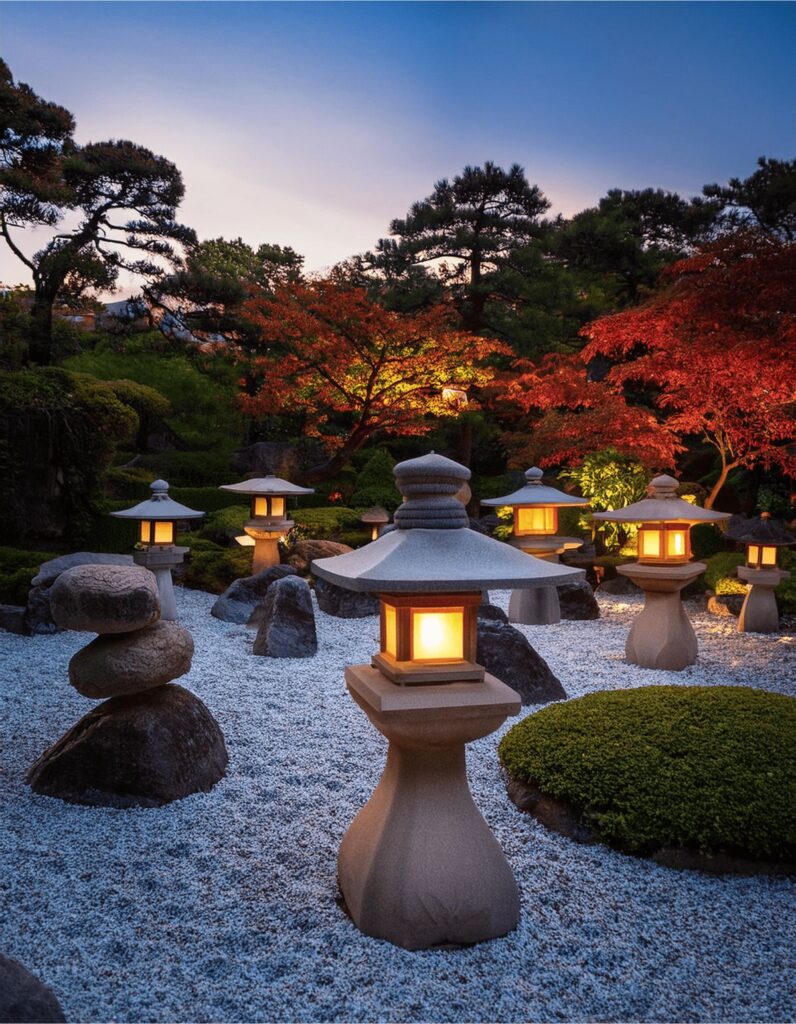
Traditionally used to light the paths to Buddhist temples, Stone Lanterns (or Toro) are now used as focal points. They are usually carved from granite and represent the five elements of Buddhist cosmology: earth, water, fire, wind, and spirit.
- The Appeal: They add a sense of history and “permanent” architecture to the garden.
- Placement: Don’t put them in the middle of a lawn. Instead, nestle them among ferns, place them at a bend in a path, or set them near a water feature to suggest a guiding light.
Also Read: Outdoor Dining Area Ideas: Design a Perfect Spot for Family
3. The Zen Rock Garden (Karesansui)
If you have a dry patch of land or struggle with high water bills, a Karesansui (dry landscape garden) is the perfect solution. This style uses sand or fine gravel to represent water and large rocks to represent mountains.
- The Decor: Invest in a high-quality wooden rake. Raking the gravel into circular or rippling patterns is considered a form of “moving meditation.”
- Aussie Adaptation: Use local decomposed granite or white crushed quartz for a clean, bright look that withstands the Australian sun.
4. Bamboo Fencing (Sode-gaki)
Privacy is essential in Japanese Garden Decor Idea. Bamboo fencing provides a soft, organic texture that looks much more intentional than a standard Colorbond or timber fence.
- The Look: Look for “Sode-gaki” or sleeve fences. These are small, free-standing sections of fence used to hide unsightly garden elements (like a pool pump or bins) while adding a decorative “layer” to the garden.
- Benefits: Bamboo is sustainable and offers a warm, honey-coloured backdrop that makes the green of your plants truly “pop.”
Quick Guide: The Essential Elements
| Element | Japanese Name | Symbolic Meaning |
| Water | Mizu | Renewal, continuity, and the passage of time. |
| Stone | Ishi | Endurance, stability, and the “bones” of the earth. |
| Lantern | Toro | Enlightenment and the light of knowledge. |
| Bridge | Hashi | The transition from the mundane to the spiritual. |
Also Read: 10 Patio Furniture Design Ideas for the Australian Lifestyle
5. Stepping Stones (Tobi-ishi)
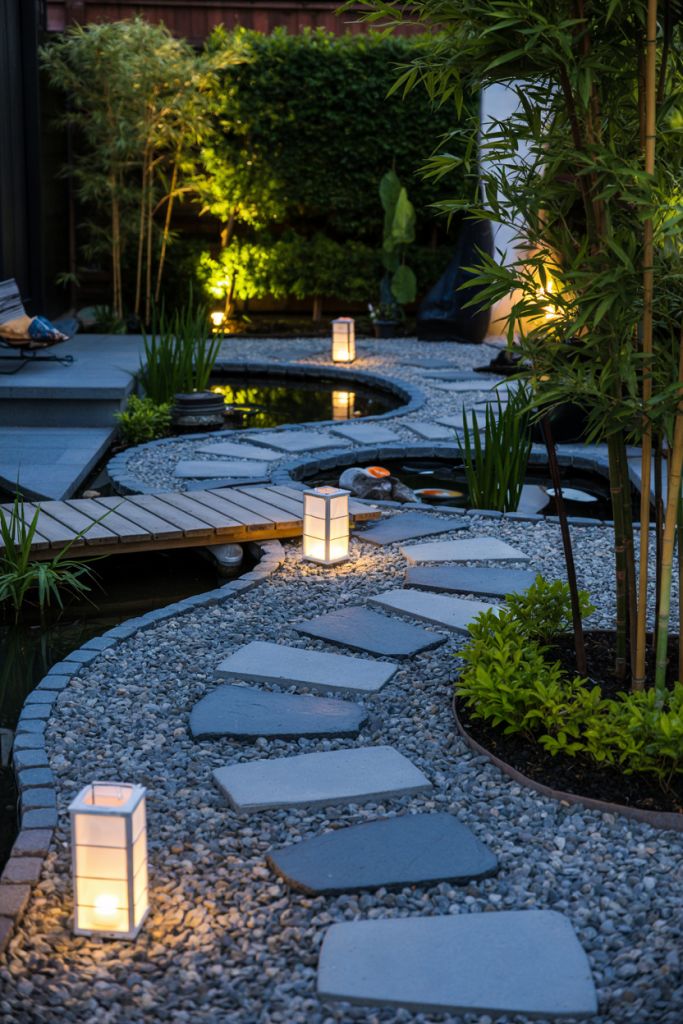
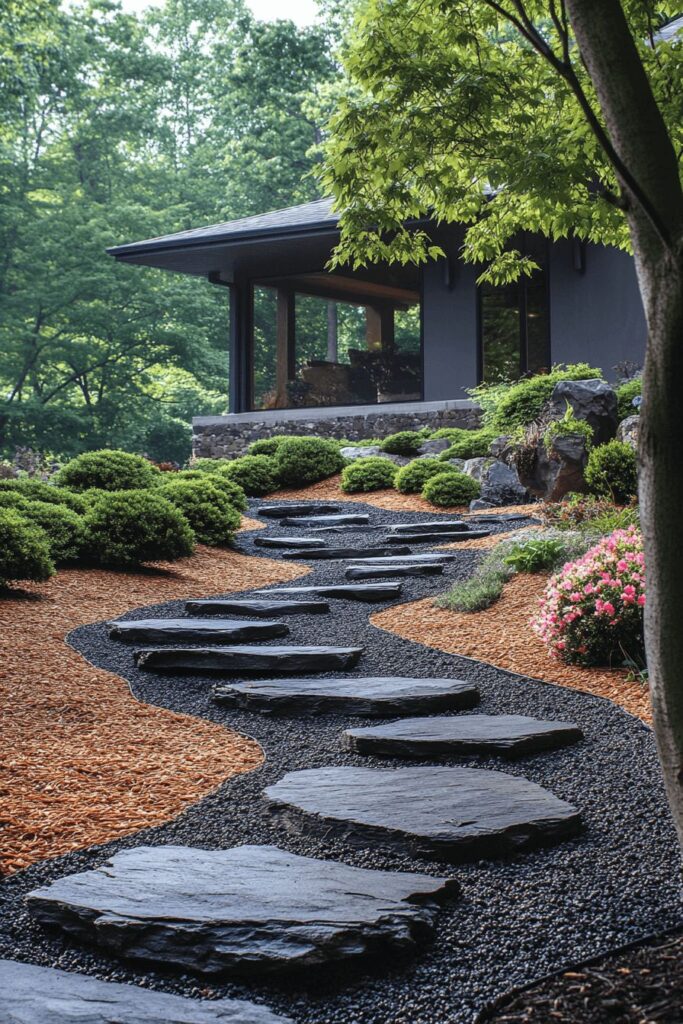
In a Japanese garden, the path is just as important as the destination. Tobi-ishi (stepping stones) are used to guide a visitor’s pace.
- The Design: Stones are often placed slightly apart or in irregular patterns, forcing you to look down and be mindful of your steps.
- Decor Idea: Choose flat, natural river stones or weathered volcanic rock. Surround them with moss or “Scleranthus biflorus” (Australian Cushion Bush) to mimic the look of traditional Japanese moss.
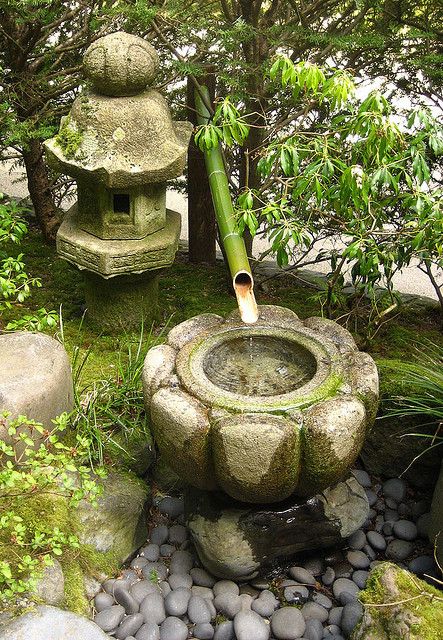
6. The Tsukubai (Water Basin)
The Tsukubai is a low stone basin used for ritual hand-washing. While you may not use it for its original religious purpose, it serves as a beautiful, low-profile water feature that attracts local birdlife.
- Styling Tip: Surround the basin with smooth river pebbles and a few stalks of Japanese Forest Grass (Hakonechloa). The contrast between the heavy stone and the flowing grass is a classic Japanese design move.
7. Bridges (Yatsuhashi)
Even if you don’t have a pond, a small bridge can be used as a decorative element over a “dry creek” made of pebbles.
- The Zig-Zag Bridge: Known as Yatsuhashi, these bridges are designed in a zig-zag pattern. Legend says this prevents evil spirits from following you (as they can only travel in straight lines), but practically, it forces you to stop and admire the garden from different angles.
8. “Cloud-Pruned” Trees (Niwaki)
While not an “object,” the way you prune your plants is a decorative choice. Niwaki is the art of pruning trees to look like clouds or ancient, wind-swept miniatures.
- The Look: You can achieve this with Japanese Maples, Camellias, or even some hardy Australian natives like Leptospermum.
- The Impact: It creates a sense of “scale,” making a small garden feel like a vast, ancient landscape.
Final Thoughts: Simplicity is Key
The most important “decor” in a Japanese garden is actually space. In the West, we often feel the need to fill every corner of a garden with pots and furniture. The Japanese philosophy of Ma (negative space) teaches us that the empty areas are what give the objects their beauty.
Start small. Choose one focal point—perhaps a stone lantern or a bamboo water feature—and build your sanctuary around it.